

How To Properly Classify Contractors vs Employees
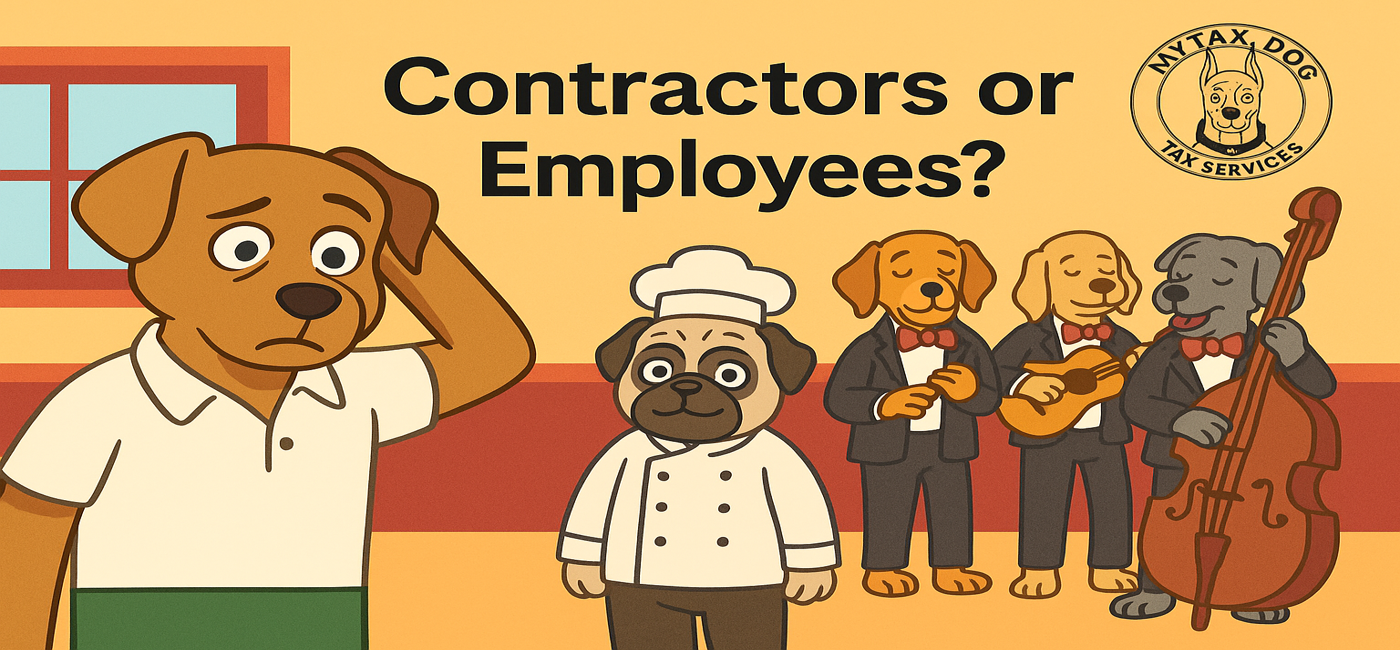
How To Properly Classify Contractors vs Employees
Correctly classifying workers is one of the most important responsibilities for any business owner. Whether you hire help occasionally or have a growing team, the IRS expects you to follow clear rules when deciding whether someone is an independent contractor or an employee. Misclassification can lead to back taxes, penalties, and compliance issues—so understanding the criteria is essential.
Why Worker Classification Matters
How you classify a worker determines:
- Whether you must withhold income taxes
- Whether you must pay the employer share of Social Security and Medicare (FICA)
- Whether the worker receives a W-2 or a 1099
- Eligibility for unemployment insurance and workers’ compensation
- Whether benefits can legally be offered
Classifying someone as a contractor when they function as an employee can trigger costly IRS and state penalties.
The IRS Three-Factor Test
To determine the correct classification, the IRS evaluates three primary categories:
1. Behavioral Control
This examines whether you control how the worker performs their job.
Indicators of an employee:
- Required work hours
- Required training
- Detailed instructions about how tasks must be completed
Indicators of a contractor:
- Freedom to choose how work is completed
- Ability to set their own schedule
- Use of their own methods and expertise
2. Financial Control
This focuses on who controls the financial aspects of the work.
Contractors typically:
- Set their own rates
- Invoice for services
- Have unreimbursed expenses
- Provide their own tools and equipment
- Have the opportunity for profit or loss
Employees typically do not assume financial risk and are paid a consistent wage.
3. Type of Relationship
This analyzes the overall structure of the working relationship.
Considerations include:
- Written contracts
- Whether benefits are offered
- The expected permanence of the relationship
- Whether the worker’s role is a key part of your core business
If the tasks performed are central to your operations, the worker is more likely an employee.
Real-World Examples
More likely an employee:
- A receptionist working set hours
- A customer support representative with ongoing duties
- A manager overseeing day-to-day operations
More likely a contractor:
- A graphic designer hired for a single project
- A freelance photographer for a specific event or campaign
- A part-time bookkeeper who works with several clients
Consequences of Misclassification
Improperly classifying an employee as a contractor can lead to:
- Back payroll taxes (Social Security, Medicare, FUTA, SUTA)
- Penalties for failing to withhold taxes
- Interest on unpaid amounts
- Potential wage and hour violations at the state level
The IRS can reclassify workers retroactively, creating large unexpected tax bills.
Section 530 Safe Harbor
In some limited cases, the IRS may offer relief from reclassification penalties if you can prove:
- You had a reasonable basis for classifying the worker
- You were consistent in how you treated similar workers
- You properly filed all required 1099s
This relief is not guaranteed—but it can protect you if you acted in good faith.
Best Practices for Staying Compliant
To avoid misclassification issues:
- Use clear, written contracts for all contractors
- Avoid controlling how contractors perform work
- Don’t provide benefits or equipment to contractors
- Regularly review worker roles as they evolve
- Keep documentation supporting your classification decisions
Being proactive protects your business and prevents IRS issues later.
Mytax.dog Can Help You Classify Workers Correctly
Worker classification can be complex, but Mytax.dog can guide you through IRS rules, help you determine the correct status, and ensure your payroll and filings stay compliant.
We’ll help you:
- Understand IRS classification rules
- Avoid costly penalties
- Set up proper payroll for employees
- Issue accurate 1099s and W-2s
- File all federal and state tax forms correctly
Hiring help should grow your business—not put it at risk. Mytax.dog makes staying compliant simple and stress-free.